
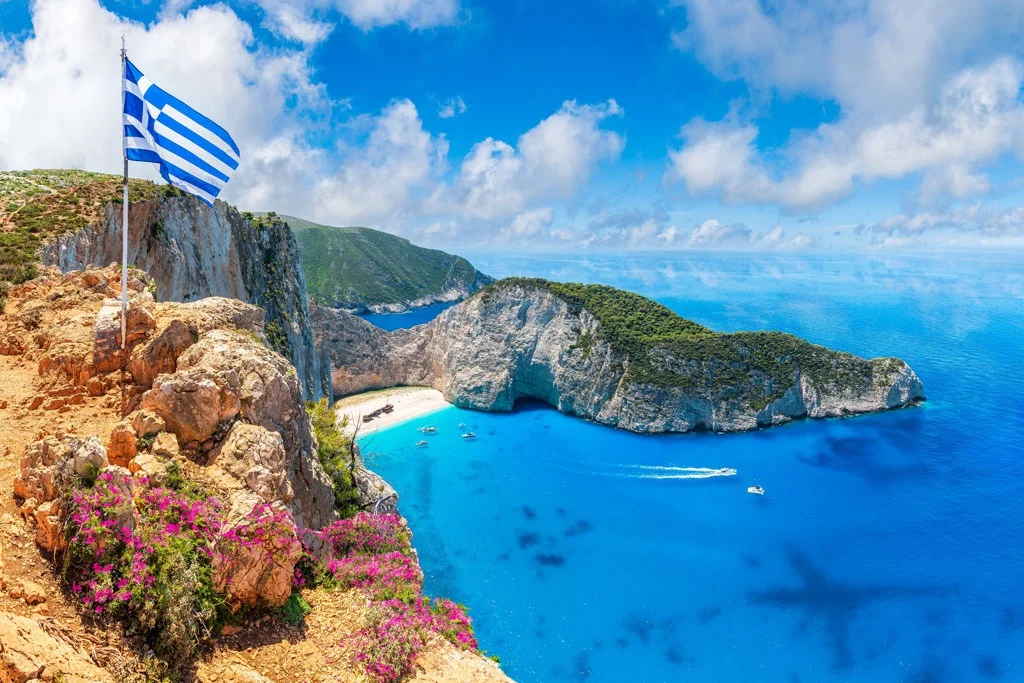
Zakynthos (Zante) is a lush, green island with fertile valleys and a mild climate (area: 406 sq. km, coastline: 123 km). The diversity of its landscape has created different types of beaches. In the southeastern part of the island, there are sandy beaches in secluded coves, where the calm waters are a deep blue; while if you prefer steep cliffs and an interesting underwater world, the western part of the island is worth visiting.
The Venetians, who ruled Zakynthos from 1484 to 1797, named the island “Fioro di Levante” (Flower of the East), as there are over 7,000 species of flowers on Zakynthos. According to tradition, Zakynthos was the island’s first inhabitant, and the ancient acropolis is attributed to him. He was the son of Dardanus, who ruled the ancient kingdom of Phrygia. In later years, a Venetian fortress was built on this site.
Venetian architectural influence has left its mark on Zakynthos, despite the damage caused by the region’s strong seismic activity. After the devastating earthquake of 1953 and the subsequent fire, many historic buildings and churches were completely destroyed, resulting in the loss of significant treasures they once housed. The city was rebuilt according to a plan with strict anti-seismic regulations, largely respecting its previous architectural style.
Special attention is given in Zakynthos to the protection of two endangered species: the sea turtle Caretta caretta and the Mediterranean monk seal Monachus monachus.
Visiting the City of Zakynthos
- Solomos Square, surrounded by buildings featuring traditional island architectural elements, arched windows, and arcades.
- The Post-Byzantine Museum of Zakynthos, located at Solomos Square, displaying treasures such as gilded statues, icons, and wood-carved artworks.
- The Church of Saint Dionysios.
- Saint Mark’s Square, where in 1797 the rebels (popolari) burned the Libro d’Oro and planted the tree of freedom. The Venetian Castle sits on a hill above the city, at the site of the ancient acropolis called Psophis.
- Strani Hill, 2 km from the city, offering stunning views. Here, the poet Dionysios Solomos was inspired to write the Hymn to Liberty (later the Greek National Anthem) and The Free Besieged, while observing the siege of the city of Messolonghi.